
Can You Repair a Hydraulic Hose? What Is Safe, What Is Not, and What It Costs
Can you repair a hydraulic hose? Yes, but only in ways that suit the pressure the hose carries, which means a proper repair and never a patch.

Quick answer
Yes. A leaking or burst hydraulic hose is repaired by fitting a new, correctly rated hose assembly, or by replacing a failed end fitting on a hose that is otherwise sound. Tape, clamps, splices and sealants are makeshift repairs, and they are a recognised cause of serious injury.[1]
In this guide
- What does it mean to repair a hydraulic hose?
- Why patches, tape and clamps are not a repair
- Which damage can be repaired and which means replacement?
- How a proper hydraulic hose repair is done
- Can you repair a hydraulic hose yourself?
- How much does it cost to repair a hydraulic hose?
- Repair it now, then stop the next failure
- Common questions
What does it mean to repair a hydraulic hose?
People use the word repair for three different jobs, and the difference matters because each job suits a different kind of damage. A hydraulic hose is not a single piece of rubber. It is an assembly made of an inner tube, layers of reinforcement, an outer cover and a metal fitting crimped onto each end. The tube carries the oil, the reinforcement holds the pressure, and the cover protects the layers underneath from abrasion and weather. When any one of those parts fails, the rest of the assembly can no longer be trusted to do its job at working pressure.
The first job is replacing the whole assembly. A technician measures the old hose, matches its size, pressure rating and fittings, and makes up a new assembly with crimped ends. This is the right answer when the hose itself is worn, cracked, kinked, blistered or leaking along its length. It is also the most common kind of on-site hydraulic hose repair.
The second job is replacing one end fitting. If the hose is in good condition but a fitting is damaged, corroded or leaking where it meets the hose, a technician can cut the hose back, fit a new end and crimp it. Whether that is suitable depends on the hose type, the fitting and the manufacturer’s specification, so it is a decision for a trained person and not a guess made beside the machine. AMSA guidance says the fittings for hydraulic hose, and the way the hose is installed, must follow the manufacturer’s instructions.[4]
The third job is making a hose that is not available off the shelf. When the original part is discontinued, or the machine is imported and the dealer cannot supply the hose, a custom hose can be made up to the same specification from hose and fittings. One truck owner wrote in a Google review that the manufacturer did not have the right air brake hose in Australia, and Asaad Hydraulics made a custom air brake hose to solve it.
Why patches, tape and clamps are not a repair
The answer to can you repair a hydraulic hose changes completely when the proposed fix is a patch. Hydraulic systems run at pressures that make household logic dangerous. A NSW mine safety alert describes a hose in a system supplied at 350 bar, about 5,000 psi, that broke away from its connection and injected oil into a worker’s thigh and leg. The worker was taken to hospital and needed several operations.[3]
The UK Health and Safety Executive lists the operator errors behind fluid injection injuries, and several of them are repair habits: searching for leaks with bare hands, failing to replace damaged hoses, and making makeshift repairs or using incorrect couplings.[1] The same guidance warns that even pinprick punctures in pipework can cause major injury, and that an injection injury may end in amputation or major surgery.[1] A small leak is therefore a reason for more care, not less.
Tape, hose clamps, rubber sleeves and sealants all work by friction or adhesion on the outside of the hose. The strength of a hydraulic hose comes from its reinforcement layers, and a patch adds none of that strength. The hose is also flexed, heated and vibrated every minute the machine works, which is exactly what makes an outside patch let go.
Numbers worth knowing
Safe repair or makeshift fix?
A safe repair
Which damage can be repaired and which means replacement?
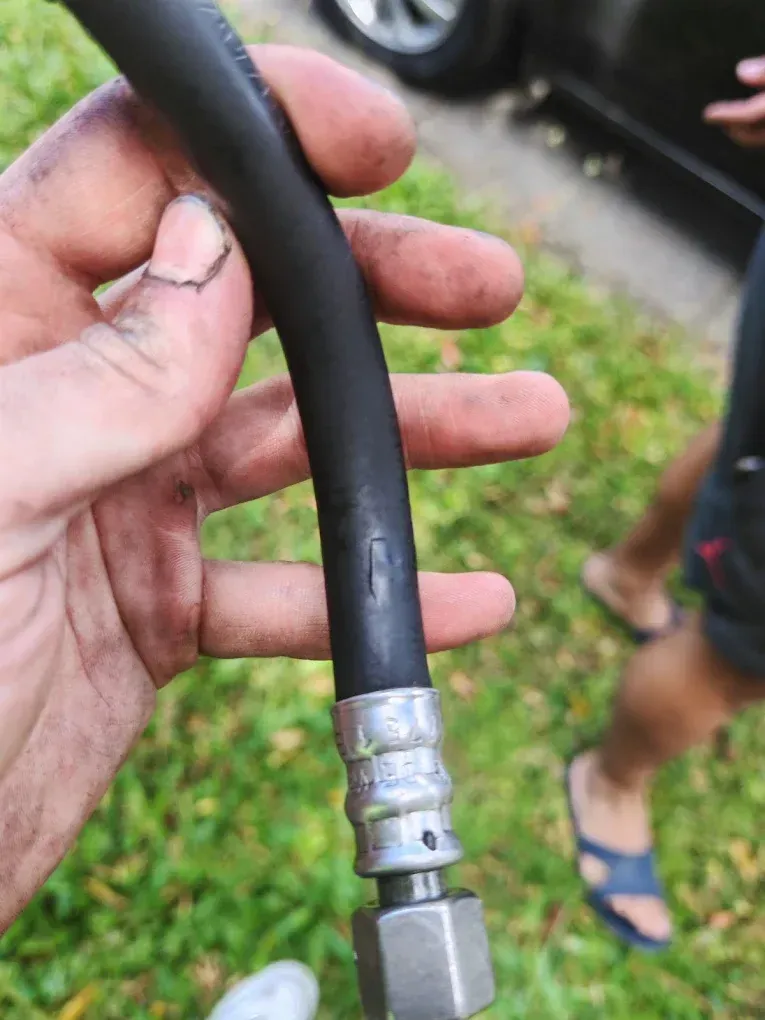
Most of the damage that brings a machine to a stop means the hose assembly is replaced. The Australian Maritime Safety Authority publishes plain rejection criteria for flexible hydraulic hoses on commercial vessels, and they are a useful yardstick for any equipment. It says installed hose assemblies should be checked for leaks along the hose or around the ends, damaged or corroded braid, cracked or badly corroded ends, outer sheath damage, kinked or flattened hose, hose that is hard, stiff, charred, blistered or soft, damaged fitting threads and any exposed wire. Where any of those conditions exist, the assembly should be replaced.[4]
For rubber hose the same guidance gives extra reasons to reject: a cover rubbed thin by abrasion, a cover that is cracking, blistering or hardening with age, and soft spots or bulges that point to a weakened bond between the cover and the layers beneath.[4] A bulge shows that the layers beneath the cover are weakening, so it deserves attention before the leak, not after.
What to do with the damage you can see
| What you see | What it means |
|---|---|
| A leak along the hose body | Replace the hose assembly[4] |
| A cracked, hardened, blistered or soft cover | Replace the hose assembly[4] |
| A bulge or soft spot in the cover | Replace the hose assembly[4] |
| Exposed or broken wire braid | Replace the hose assembly[4] |
| A kinked, crushed or flattened hose | Replace the hose assembly[4] |
| A damaged thread on a fitting | Replace the assembly or the fitting, as a technician advises[4] |
| Weeping where the hose meets the fitting | Have a technician check whether the hose is sound enough for a new end fitting |
One failed hose often tells you something about the others. A NSW safety bulletin on three injection injuries lists the contributing factors: external wear and abrasion, corrosion, a bend radius that was too tight, poor hose inspection and no scheduled change-out program.[2] Those are machine-wide habits, not one-off bad luck, which is why a good technician looks at the rest of the hoses while they are at the machine.

Called late afternoon with a blown hose in the middle of nowhere on my Cat positrack. Brought everything needed with them and had the hose changed out in an hour. But they provided more service than I was expecting, they thoroughly inspected every other hose on the machine for signs of damage or corrosion, which led to a couple more hoses being changed to save me a callout in the near future. They also made up a couple of spare hoses for common blowout parts for the future! Highly recommend, answers the phone and turns up on time!
 Liam Sharp
How a proper hydraulic hose repair is done
A correct repair follows the same order every time. Each step exists because skipping it is how people get hurt or how the new hose fails early.
The six steps of a hydraulic hose repair
- Isolate and release pressureShut the machine down and remove stored pressure before touching anything.[1]
- Find the fault safelyLook for the leak without running a bare hand along the hose.[1]
- Identify the hoseMatch size, pressure rating, temperature, material and fittings.[5]
- Make up the new assemblyCut, fit and crimp the fittings to the manufacturer’s instructions.[4]
- Route it correctlyKeep it clear of rubbing, kinks, twisting and tight bends.[4]
- Check itLeak test the repair[5] and look over the neighbouring hoses.
The first step is the one most often skipped. The HSE names failing to release pressure during repair or maintenance as an operator error, and says instructions must cover how to remove pressure and carry out maintenance safely.[1] A hose that looks dead can still hold energy, and the NSW alert shows what happens when a pressurised hose lets go of its connection.[3]
The second step is how the fault is found. The HSE lists searching for leaks with bare hands as an operator error.[1] The NSW bulletin records a fitter who was moving hoses out of the way while trying to identify a blown hose and suffered an oil injection injury to a finger that needed surgery from the fingertip to the base of the wrist.[2] A technician looks, wipes and traces the line from a safe position and does not trust a glove or a hand to find a jet of oil.
Identifying the hose is the step that decides whether the repair lasts. WorkSafe Victoria says hose assemblies must be fit for purpose and that selection should consider temperature and pressure ratings, material compatibility and the fittings.[5] A hose that fits the thread but is rated for less pressure, or a hose made from material that does not suit the oil, will fail even though it looks identical to the original.
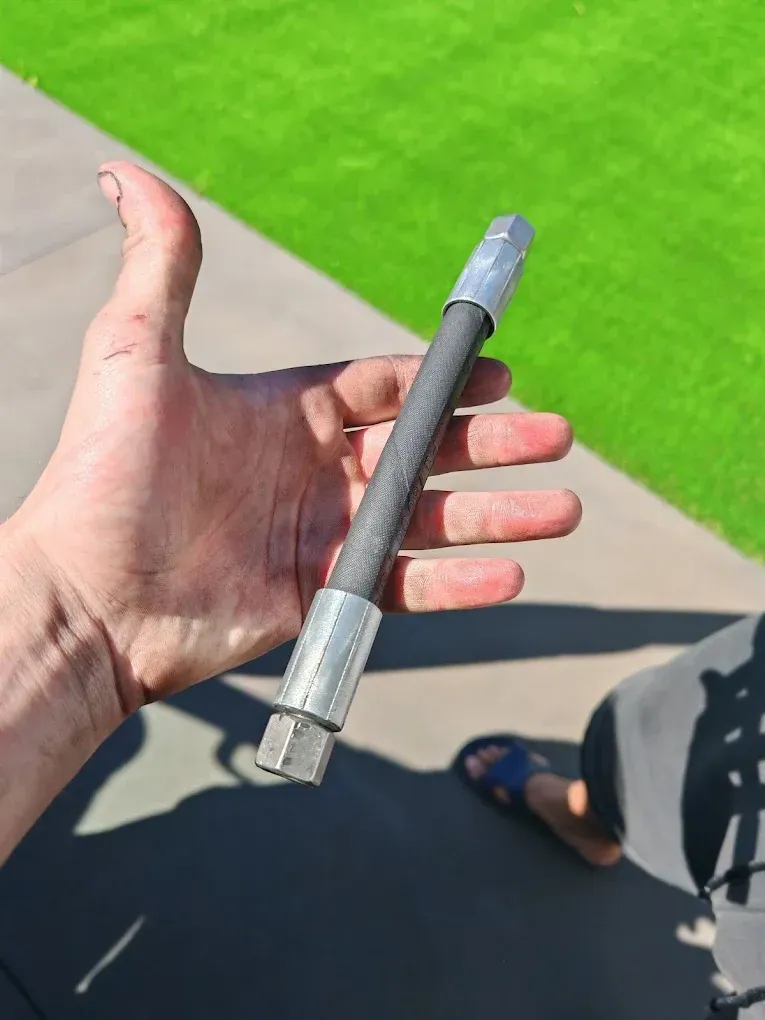
Making up the new assembly is a precision job. The fittings are crimped onto the hose with a machine set for that hose and fitting combination, which is why a technician needs the right dies and the right information, and why crimping at your machine is possible when the equipment comes to you. Routing then matters as much as the crimp. The AMSA guidance says hoses should be routed to avoid undue stress from mechanical loads, abrasion and rubbing from insufficient clearance, flattening, kinking and minimum bend radii, twisting, thread and seal damage and equipment movement.[4] A hose that is correct but fitted with a kink or a tight bend will fail early.
The final step is a check. WorkSafe Victoria lists visual checks and pneumatic or hydraulic leak testing among the inspection activities for hose assemblies.[5] One Asaad Hydraulics customer described exactly this sequence: the technician inspected the hose for other faults, repaired it with a neat finish and then tested it.
Amazing work. Came out same day to fix a pressure washer hose. Didn’t charge a call out fee. Much cheaper than other large companies. Inspected the hose for other faults, repaired it with a professional neat finish and then tested it. Definitely recommend him before you try others.
 lina petro
Can you repair a hydraulic hose yourself?
The honest answer depends on the hose and the machine. Hydraulic hose repair kits are sold online, and a kit does not tell you the pressure rating of the hose, whether the fitting is compatible, or whether the line still holds stored pressure. WorkSafe Victoria’s alert states that employers must ensure flexible hose assemblies are fit for purpose and do not pose a risk to health and safety, and it expects workers to be trained in selecting and using them, including visual inspection and pass or fail criteria.[5]
On equipment such as excavators, tippers, cranes, elevated work platforms and car hoists, a failed repair can drop a load or injure the person nearby. The safest approach is to treat a hose repair as a skilled job, even when the part itself looks simple. A mobile technician can come to the machine, so the choice is rarely between doing it yourself and leaving the machine idle for days.
There is one thing everyone can do safely: take the machine out of use the moment a hose leaks, keep people clear, and wait for the repair. Do not run a hand along the hose and do not keep working until the end of the shift.[1]
Hose gone, or about to go? Tell us the machine and we will quote before any work starts.
Get a free quoteHow much does it cost to repair a hydraulic hose?
The cost depends on the size of the hose, its pressure rating, its length, the type of fittings, whether the job is done at your site or at a workshop, and what time of day you need it. Because those variables change the price, the sensible approach is to ask for a quote before any work starts, and to ask what the figure includes.
Asaad Hydraulics publishes its starting prices on its own website. These are the company’s own figures, and each one includes the repair itself.
Asaad Hydraulics starting prices, repair included
Price comes up often in customer reviews. One customer wrote that the service was priced very well and cheaper than the big players, and another said there were no surprises on the bill.
Absolute great experience Sunday didn't matter on time and very helpful and priced very good actually cheaper than the big players.
 Moses Nader
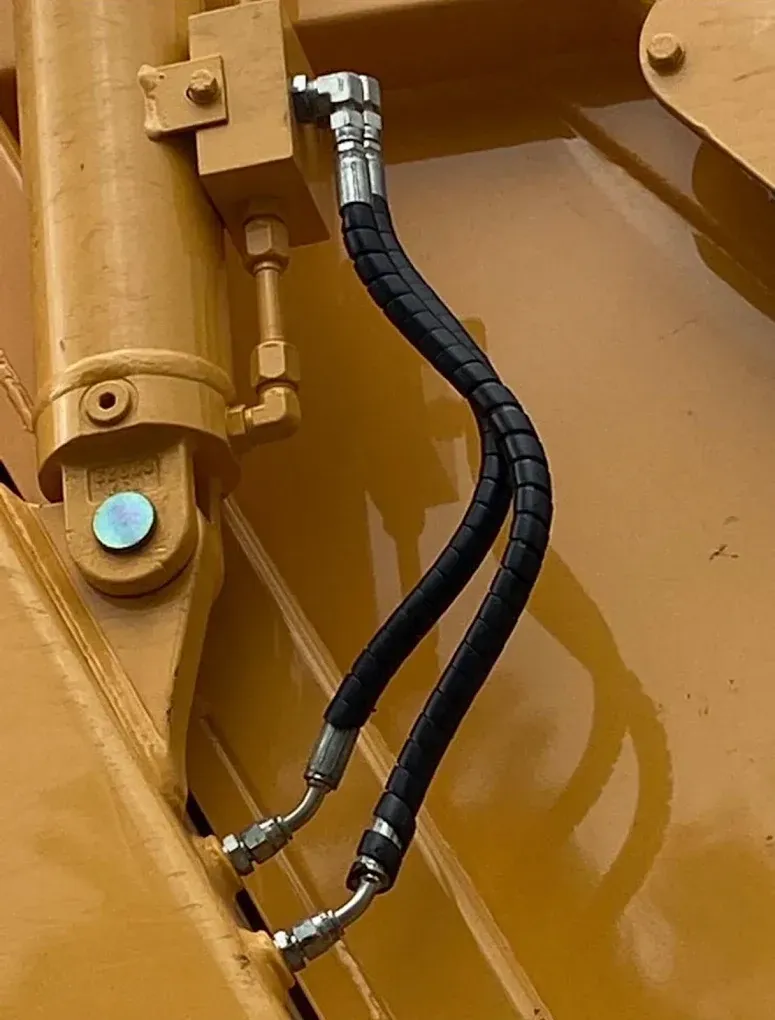
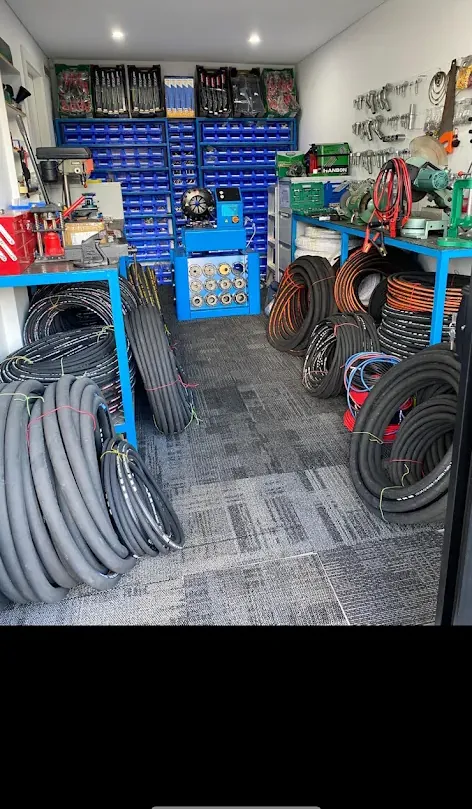
If you want to compare quotes, ask each business the same four questions. Is there a call-out fee before work starts? Does the price include the hose, the fittings and the labour? Is the figure for working hours or after hours? Will the technician look over the other hoses while they are there? A low headline number that leaves out the hose or adds a call-out fee at the end is not low once the job is finished.
Repair it now, then stop the next failure
A repair gets the machine working again. Inspection and replacement on a schedule keeps it working. The AMSA guidance says installed hose assemblies should get a periodic visual check at a frequency set by the maintenance plan and no less than once a year, and that hoses found defective or due for life expiry should be replaced at the first opportunity.[4] It also records a vessel fire that traced back to a hydraulic hose that appeared to be the original from 1995 and had never been properly inspected, tested or replaced.[4] A hose that has never been checked is a hose nobody can vouch for.
Rubber ages whether the hose is working or sitting on a shelf. For synthetic rubber hose, the same guidance sets a shelf life of four years from the date of manufacture and a maximum service life of 12 years in critical systems, with condition monitoring deciding the life of hose in non-critical systems.[4] The date is not a secret. A hose manufactured in the second quarter of 1998 carries the code 2Q98 printed at repeated intervals along the lay line.[4] Checking that code is one of the quickest ways to find out how old a hose really is.
A simple inspection and replacement rhythm
- Every dayLook at the hoses on the machine for leaks, rubbing and kinks before work starts.
- At least every 12 monthsA full visual inspection of every installed hose assembly.[4]
- 4 years from manufactureThe shelf life of rubber hose, counted from the date code on the lay line.[4]
- Up to 12 yearsThe maximum service life for rubber hose in critical systems, with condition checks deciding the rest.[4]
A short list of habits prevents most repeat failures. Keep hoses off the ground, because dragging hose can damage it.[3] Fit guards or protection where a failed hose could strike an operator.[1] Replace any hose that shows the rejection signs listed earlier, even if it has not leaked yet. And when one hose does fail, have the neighbouring hoses looked at on the same visit, which costs far less than a second breakdown.
Related service
Custom hydraulic hoses
Need a hose that is discontinued or hard to source? We make custom hydraulic hoses to suit your machine, with on-site hose crimping.
See custom hosesHow you get a hydraulic hose repair you can trust
A hose repair does not have to be complicated. At Asaad Hydraulics we help you understand exactly what has failed and make sure the repair suits the pressure your machine works at.
There are no pushy sales tactics. We have a friendly conversation, explain the options, and give you the price before we start. You move forward at your own pace. Customers choose us because we explain things clearly and fix the problem properly.
We will tell you whether the hose needs replacing or whether an end fitting can be changed, and we will explain what the price includes so there are no surprises on the bill. When we are at your machine we can also look over the other hoses and make up spares for the ones that fail most often.
Our goal is straightforward. We want your machine working again, safely, and for as long as possible. Call us or request a quote and we will talk you through your options.
How we work with you
Our process is straightforward and built around getting you back to work.
- We talk and answer your questionsCall us or send a quote request. Tell us the machine and what has happened, and we will tell you what we can do.
- We give you the price firstQuotes are free with no hidden fees, so you know the cost before work starts.
- We come to youOur licensed and insured technicians bring the hose crimping to your machine, day or night.
- We help you avoid the next failureWhile we are there we can look over your other hoses and make up spares for the parts that fail most often.
Get in touch with us today
Tell us what has failed and we will tell you what it takes to fix it. Open 24 hours. No call-out fee within 10 km of Fairfield West.
- Get in touch: Contact page
- Phone: 0470 264 825
- Workshop: 77A Lombard St, Fairfield West NSW 2165
Common questions
Can you repair a leaking hydraulic hose?
Yes, but the repair is a replacement. A leak along the hose body means the whole assembly is replaced, and a leak at the fitting may be fixed with a new end if the hose is sound. Stop using the machine, keep people clear and never check for the leak with your hand.[1]
Is it possible to patch a hydraulic hose?
No. Patches, tape, clamps and sealants are makeshift repairs, and the HSE lists makeshift repairs among the errors that lead to fluid injection injuries.[1] A hose is only as strong as its reinforcement layers, and a patch on the outside adds none of that strength.
How much does it cost to fix a hydraulic hose?
It depends on the hose size, pressure rating, length, fittings and the time of day. Asaad Hydraulics publishes starting prices of $150 for on-site repair in work hours, $200 for nearby after-hours jobs and $400 for other after-hours jobs, with the repair included in each figure.
Is it illegal to re-end a hydraulic hose?
There is no single rule that answers this for every hose. Whether a hose can be fitted with a new end depends on the hose type, the fitting and the manufacturer’s specification, which is why a trained technician makes the call. A hose that is damaged, hardened or aged is replaced and not re-ended.[4]
How long do hydraulic hoses typically last?
There is no single figure, because duty and environment decide. AMSA guidance for commercial vessels gives synthetic rubber hose a four-year shelf life from manufacture and a maximum service life of 12 years in critical systems, with inspections at least every 12 months.[4]
Can you splice a leaking hydraulic line?
Splicing a leaking line is a makeshift repair, and the HSE names makeshift repairs and incorrect couplings among the causes of injection injuries.[1] The safe fix is a correctly rated replacement hose or line.
Should I replace the other hoses when one bursts?
It is worth having them inspected. NSW investigations into injection injuries listed poor hose inspection and no scheduled change-out among the contributing factors.[2] A technician can check the rest of the hoses at the same visit and replace any that show damage.
Who can repair a hydraulic hose on site?
A mobile hydraulic technician with a crimping machine can make up and fit a new hose at your machine. Asaad Hydraulics offers licensed and insured on-site repairs 24 hours a day, with free quotes and no hidden fees.
About the author
Asaad Hydraulics
Asaad Hydraulics is a mobile hydraulic hose repair business in Sydney. Licensed and insured technicians repair hoses on site, make custom hoses and supply fittings and parts for machinery of every size, with over 10 years of experience and a 4.9 rating from more than 70 Google reviews.
Phone: 0470 264 825 · Open: 24 hours · Service area: Sydney
Sources
- High pressure fluid injection hazards, Health and Safety Executive (UK)
- Fluid injections result in surgery, Mine Safety Bulletin SB13-01 (6 May 2013), NSW Department of Trade and Investment, Mine Safety Operations Branch
- Injury from high pressure fluid injection, Safety Alert SA02-14, NSW Department of Trade and Investment
- Inspection, testing and replacement requirements for fluid power system (hydraulic) flexible hoses, DCV-ITS-006 (05/2019), Australian Maritime Safety Authority
- Safe selection and use of flexible hose assemblies, WorkSafe Victoria
Information about hydraulic safety, standards and prices changes over time, and linked content may change or become outdated. Every machine and hose is different, so individual results and costs vary. This article is general information only and is not engineering or safety advice for your equipment. Please always contact us for help with your important hydraulic decisions.